
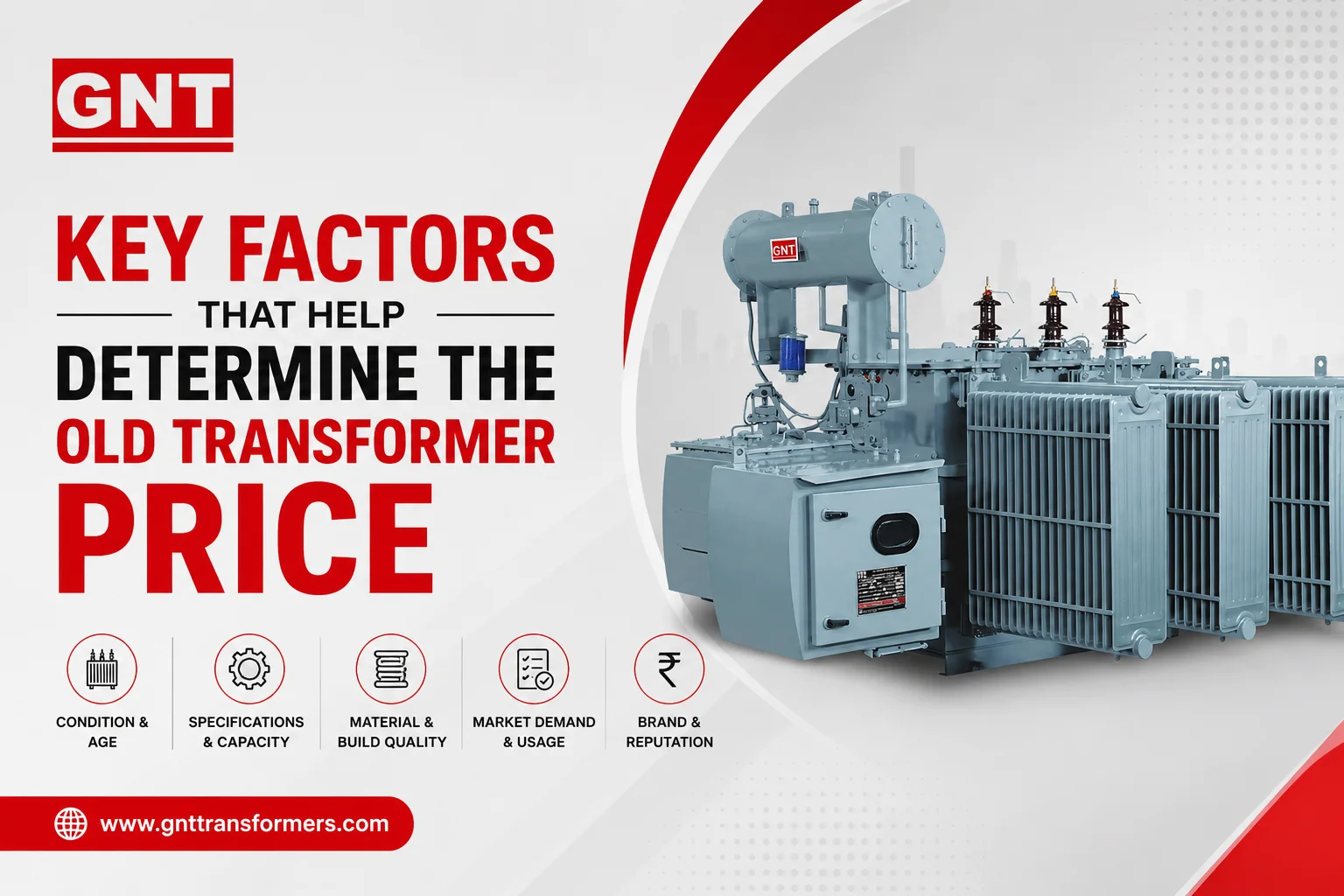
Industrial and commercial businesses often prefer used transformers so that they can minimize the initial investment cost. These transformers are available at a relatively lower price than the brand-new transformers. But most buyers face the problem of knowing whether the old transformer price shared by suppliers is even reliable or not. One of the major reasons is that they do not have enough information about those old transformers including their date of manufacturing, where they were used, whether they are repaired, whether they have original components, and their lifecycle.
If you are also planning to invest in a used transformer but are confused in deciding whether the price is nominal or not, then check this blog. Here, we are sharing key factors that will help you determine the right price of the old transformer you are planning to invest in.
Transformer’s age and working condition
Older transformers usually cost less than units with limited operational usage. Buyers inspect external condition carefully because visible rust, oil leakage, damaged parts, or overheating marks can indicate future repair expenses. A transformer that has been maintained properly and used under stable conditions generally receives better market value compared to heavily worn industrial units.
Copper winding and core material quality
Internal material quality plays a major role in deciding transformer pricing. Copper wound transformers often remain in higher demand because they provide better conductivity and durability. Core condition also affects efficiency and performance during regular operations. Important parts buyers usually inspect include:
- Copper winding quality
- Core insulation condition
- Transformer oil quality
- Cooling system performance
- Load carrying stability
Capacity and load handling performance
Power capacity directly impacts transformer pricing because larger units support heavier industrial operations. Transformers with higher kVA ratings naturally cost more due to their wider application in factories, commercial spaces, and manufacturing plants. Buyers also check whether the transformer can handle voltage fluctuations smoothly without excessive heating during continuous operation. The old transformer price may rise further when the transformer still delivers stable performance after years of industrial usage.
Repair history and maintenance records
Maintenance history gives buyers a clearer idea about the reliability of used transformers. A transformer with repeated repair issues may create hesitation because future breakdown risks remain higher. Properly refurbished transformers with genuine replacement parts can still perform efficiently when maintenance work has been done professionally. So, before finalizing a purchase, buyers often review:
- Oil testing reports
- Coil replacement details
- Service history
- Performance testing records
- Previous repair work
Market demand and scrap material rates
Though most users do not consider it but transformer prices in India also change according to industrial demand and metal market conditions. Copper scrap rates especially influence resale pricing because copper remains one of the most valuable components inside transformers. Transportation cost, project demand, and factory expansion are some other factors that add on to the overall pricing trend at different locations.
Conclusion
Purchasing a used transformer becomes easier when buyers understand the factors behind pricing. Age, copper quality, maintenance condition, load capacity, and market demand together influence the final old transformer price. Careful inspection and price evaluation beforehand always helps businesses and industries avoid unnecessary expenses after purchase. We at GNT Transformers being known for supplying both old and new transformers for different industrial requirements are helping businesses make informed buying decisions with better confidence and practical value.